
Description
General Description
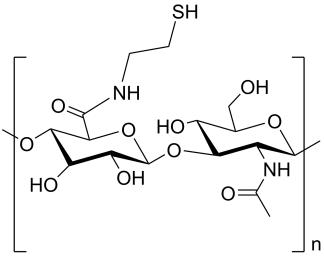
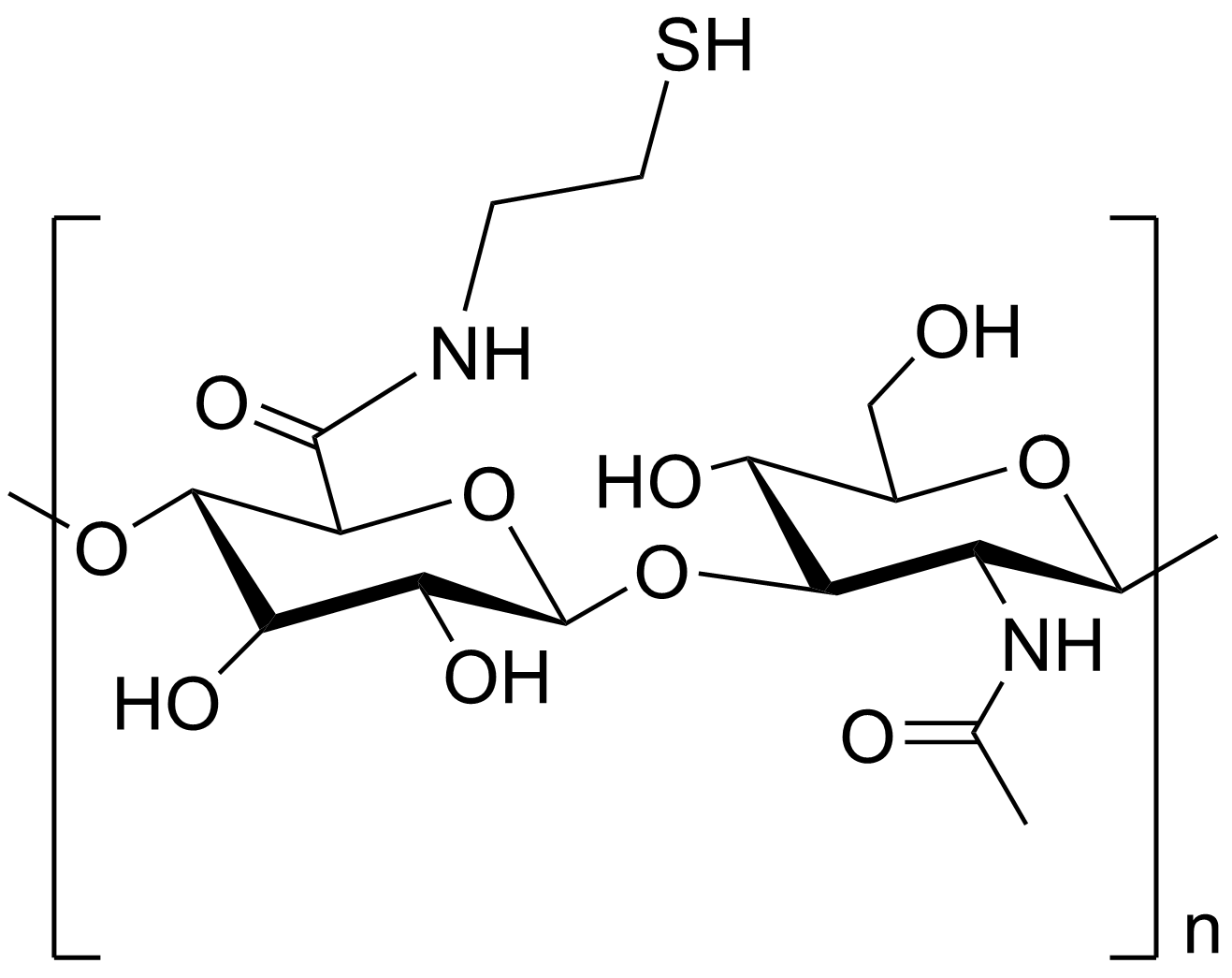
Hyaluronic Acid-Thiol (HA-SH) is a chemically modified hyaluronic acid designed for advanced hydrogel formation and biomaterial applications. Hyaluronic acid is a naturally occurring glycosaminoglycan composed of repeating disaccharide units of D-glucuronic acid and N-acetyl-D-glucosamine, commonly found in extracellular matrices.
The introduction of thiol groups provides versatile reactive sites for chemical crosslinking and bioconjugation. HA-SH can form hydrogels through oxidation-mediated disulfide crosslinking, thiol-Michael addition with maleimide or acrylate groups, and thiol-ene photoclick reactions. These mild crosslinking mechanisms allow encapsulation of cells, proteins, peptides, and therapeutic molecules.
The HA backbone interacts with biological receptors such as CD44 and contributes to cell adhesion, migration, and tissue remodeling. HA-SH is extensively used in injectable hydrogels, 3D cell culture matrices, wound healing materials, controlled drug delivery systems, and regenerative medicine research.
Applications
- Hydrogel synthesis
- Injectable hydrogels
- 3D cell culture
- Tissue engineering
- Regenerative medicine
- Drug delivery systems
- Protein encapsulation
- Cell encapsulation
- Wound healing research
- Biomaterials development
Features and Benefits
- Thiol-functionalized hyaluronic acid
- Reactive sulfhydryl groups
- Supports thiol-maleimide coupling
- Enables thiol-ene crosslinking
- Forms biodegradable hydrogels
- Excellent biocompatibility
- Cell-interactive HA backbone
- Tunable crosslinking density
- Available in multiple molecular weights