Description
General Description
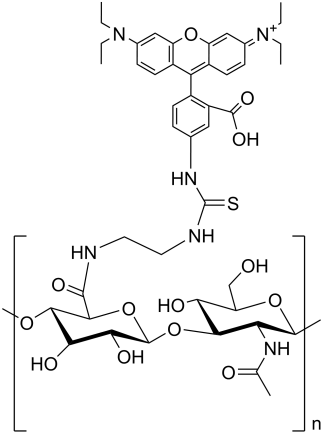
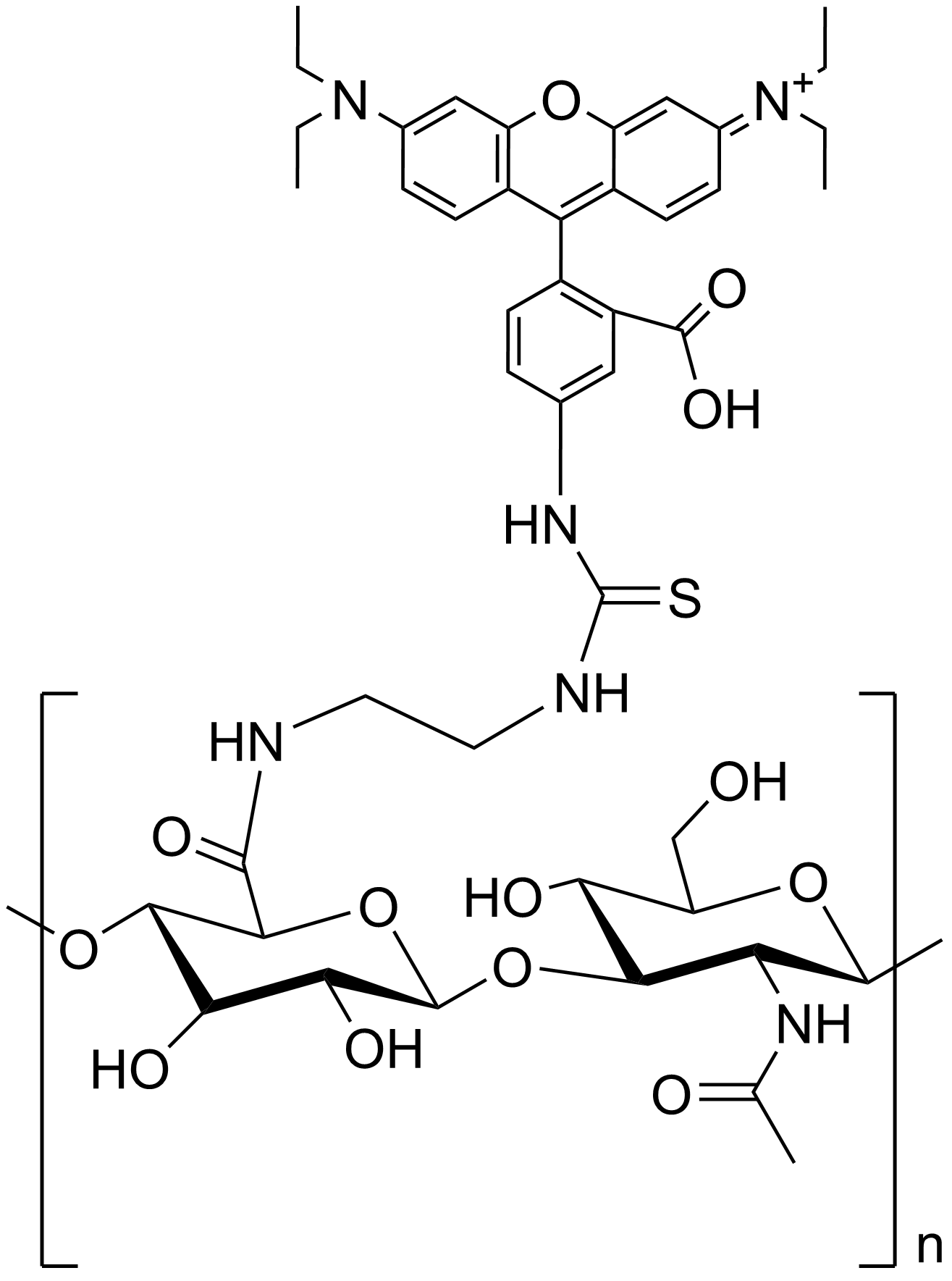
Hyaluronic acid–Rhodamine B (HA-RhB) is a fluorescently labeled derivative of hyaluronic acid in which Rhodamine B dye is covalently conjugated to the polymer backbone. This modification enables fluorescence-based detection and tracking in biological and material systems.
Key Properties
- Fluorescently labeled hyaluronic acid
- Strong visible fluorescence signal (Rhodamine B)
- Retains biocompatibility of native HA
- Suitable for imaging and tracking applications
- Water-soluble polymer conjugate
Applications
- Cellular uptake and imaging studies
- In vivo and in vitro tracking of HA-based systems
- Fluorescent labeling of hydrogels and biomaterials
- Drug delivery system visualization
- Nanoparticle and scaffold tracing
- Biodistribution studies
Functional Overview
Rhodamine B conjugation enables optical tracking of hyaluronic acid in biological environments, allowing quantitative and qualitative analysis of material distribution and behavior.
Summary
Hyaluronic acid–Rhodamine B is a fluorescent biomaterial widely used for imaging, tracking, and visualization of HA-based drug delivery and tissue engineering systems