Description
General Description
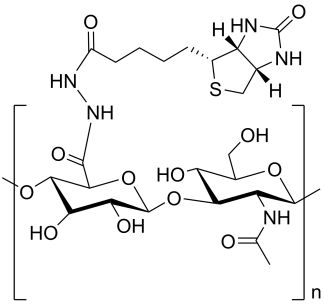
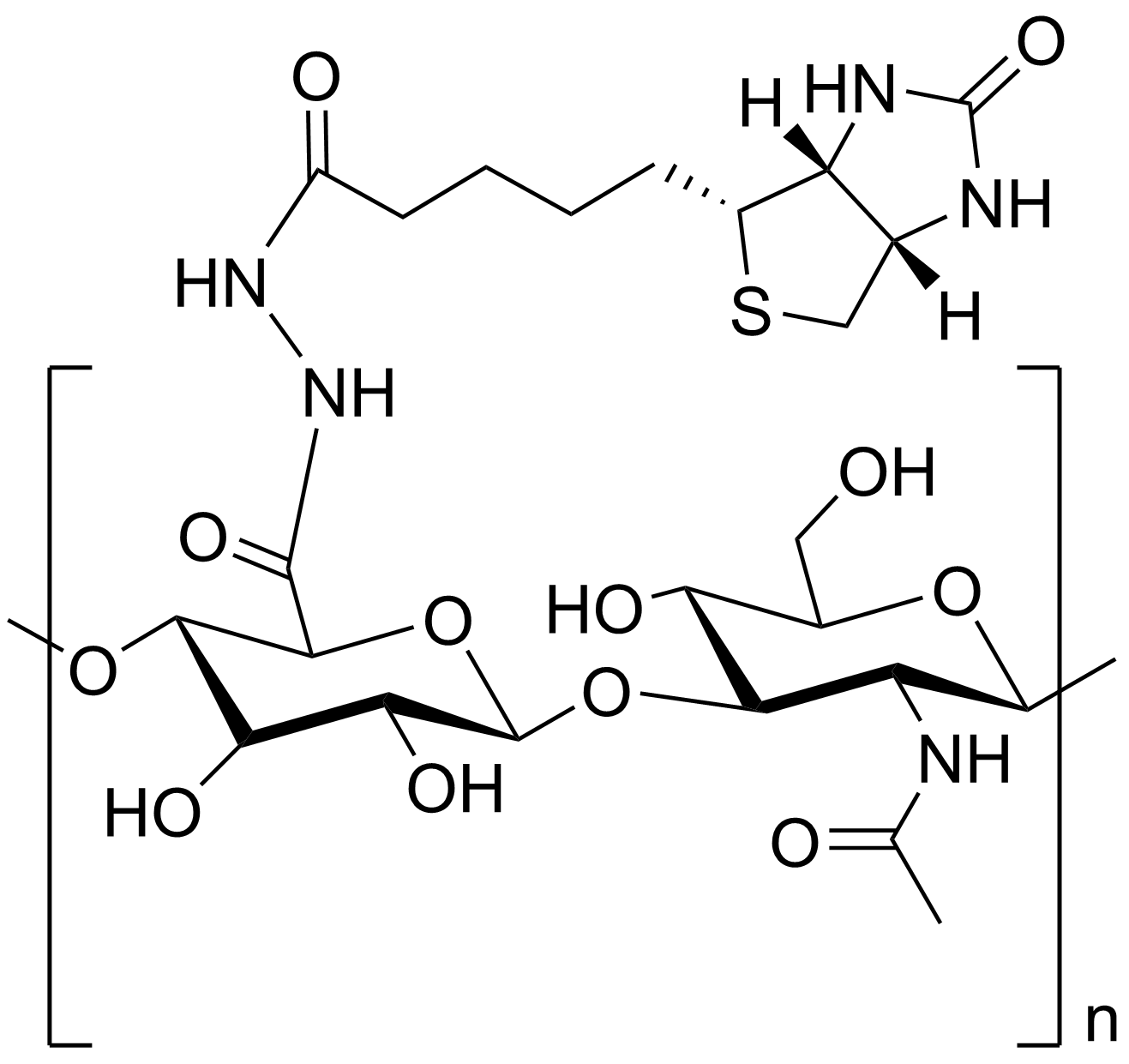
Hyaluronic acid biotin (HA-Biotin) is a chemically modified derivative of hyaluronic acid in which biotin groups are covalently attached to the polymer backbone. This modification enables high-affinity interactions with streptavidin and avidin systems for biofunctional applications.
Key Properties
- Biotin-functionalized polysaccharide
- High-affinity binding to streptavidin/avidin
- Retains native biocompatibility of hyaluronic acid
- Water-soluble biomaterial platform
- Suitable for surface and nanoparticle functionalization
Applications
- Targeted drug delivery systems
- Streptavidin-based bioconjugation
- Surface modification of nanoparticles and biomaterials
- Biosensing and diagnostic platforms
- Tissue engineering scaffolds
- Affinity-based immobilization systems
Functional Overview
Biotinylation enables strong and specific molecular recognition, making HA-Biotin a versatile linker for affinity-based biomaterials and targeted delivery systems.
Summary
Hyaluronic acid biotin is a functional biomaterial widely used in bioconjugation and targeted delivery applications due to its strong and specific streptavidin-binding capability.