
Description
General Description
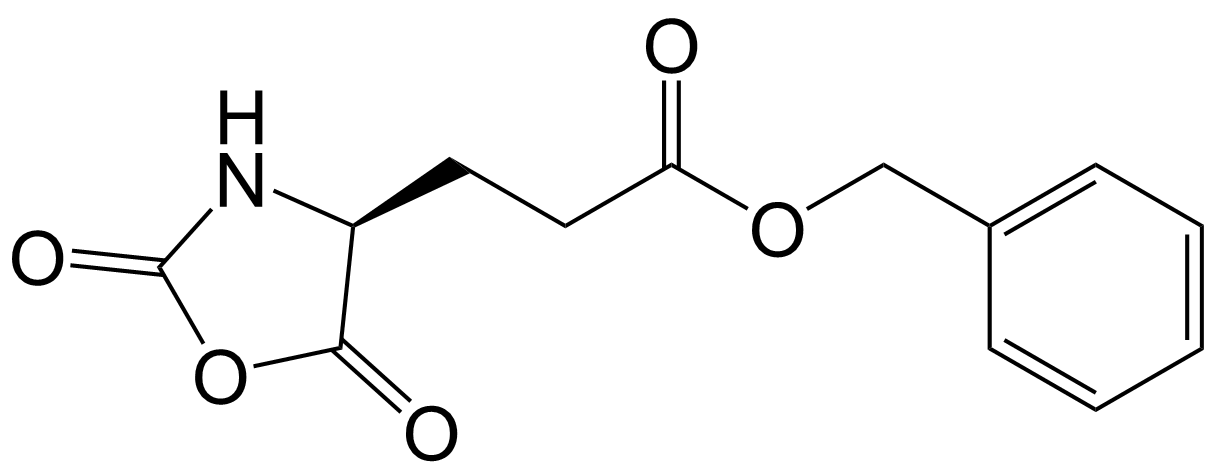
γ-Benzyl L-Glutamate N-Carboxyanhydride (BLG-NCA) is a high-purity amino acid NCA monomer designed for the controlled synthesis of polypeptides via ring-opening polymerization. The N-carboxyanhydride ring readily polymerizes in the presence of primary amine initiators to produce well-defined poly(γ-benzyl L-glutamate) (PBLG) with controlled molecular weights and narrow molecular weight distributions.
The γ-benzyl ester protects the side-chain carboxylic acid during polymerization, preventing undesirable side reactions while maintaining excellent polymerization efficiency. Following polymerization, the benzyl protecting groups can be removed by hydrogenolysis or other deprotection methods to generate poly(L-glutamic acid), a biodegradable and biocompatible polyanionic polymer widely used in drug delivery, protein conjugation, hydrogels, tissue engineering, and nanomedicine.
BLG-NCA is extensively employed in the synthesis of block copolypeptides, PEG-polypeptide conjugates, stimuli-responsive polymers, polymer therapeutics, and advanced biomaterials.
Applications
- Ring-opening polymerization (ROP)
- Poly(γ-benzyl L-glutamate) synthesis
- Poly(L-glutamic acid) synthesis
- Block copolymer synthesis
- PEG-polypeptide preparation
- Drug delivery research
- Hydrogel synthesis
- Tissue engineering
- Nanomedicine
- Biomaterials research
Features and Benefits
- High-purity NCA monomer
- Efficient ring-opening polymerization
- Benzyl-protected side-chain carboxyl groups
- Controlled molecular weight synthesis
- Suitable for living polymerization
- Excellent polymerization activity
- Ideal precursor for poly(L-glutamic acid)
- Research-grade quality


Reviews
There are no reviews yet.