Description
General Description
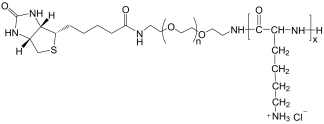
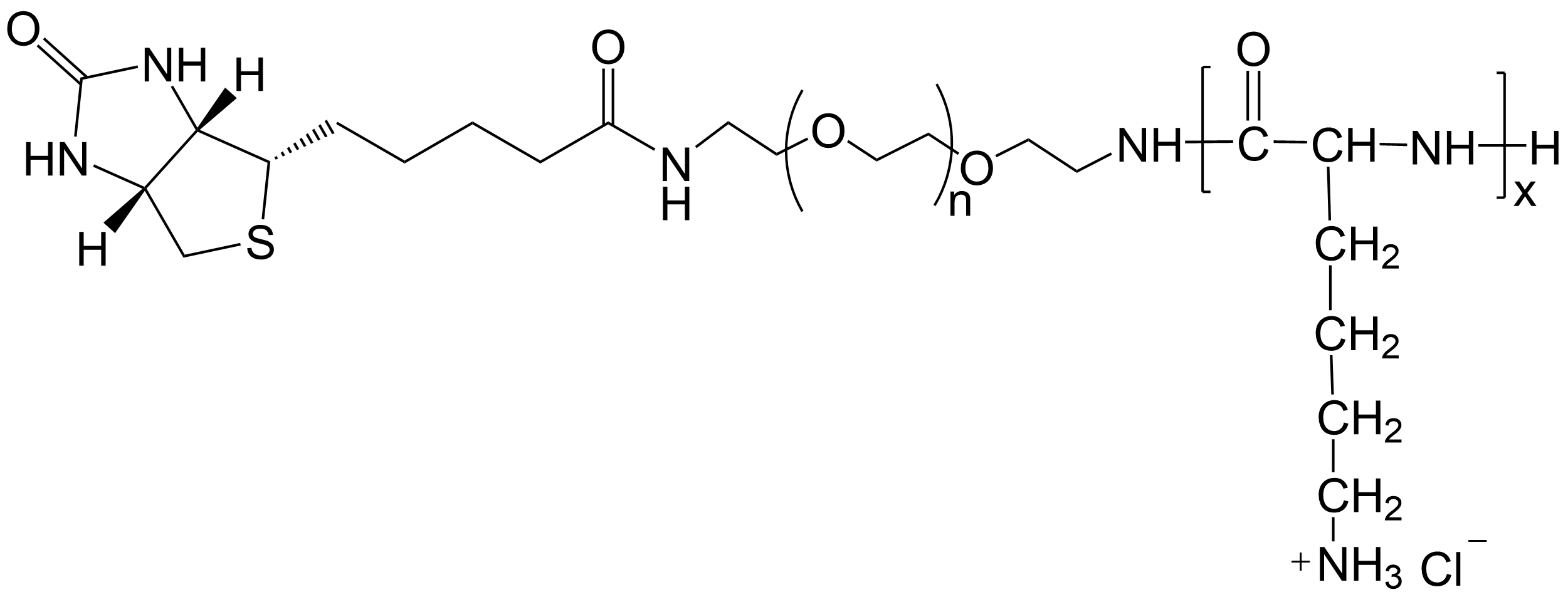
Biotin-PEG-PLL (HCl) is a multifunctional polymer composed of biotin, polyethylene glycol (PEG), and poly(L-lysine) (PLL). The biotin group enables high-affinity interaction with streptavidin and avidin systems, while the PLL segment provides cationic functionality for interaction with nucleic acids and negatively charged biomolecules.
Key Properties
- Biotin-functionalized polymer conjugate
- High-affinity streptavidin/avidin binding capability
- Hydrophilic PEG spacer improves solubility and biocompatibility
- Cationic poly(L-lysine) segment
- Suitable for biomolecular complex formation
Applications
- Gene and nucleic acid delivery
- Streptavidin-mediated bioconjugation
- Surface and nanoparticle functionalization
- Biomaterial and hydrogel engineering
- Drug delivery system development
- Biosensing and targeting applications
Functional Overview
The PEG spacer enhances aqueous stability and reduces non-specific interactions, while the PLL segment enables electrostatic complexation with nucleic acids. The terminal biotin group supports affinity-based targeting and immobilization strategies.
Summary
Biotin-PEG-PLL is a versatile multifunctional polymer widely used in bioconjugation, gene delivery, and biomaterial engineering applications.