Description
General Description
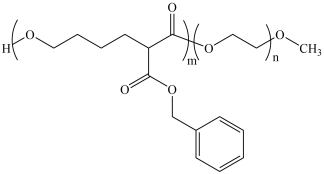
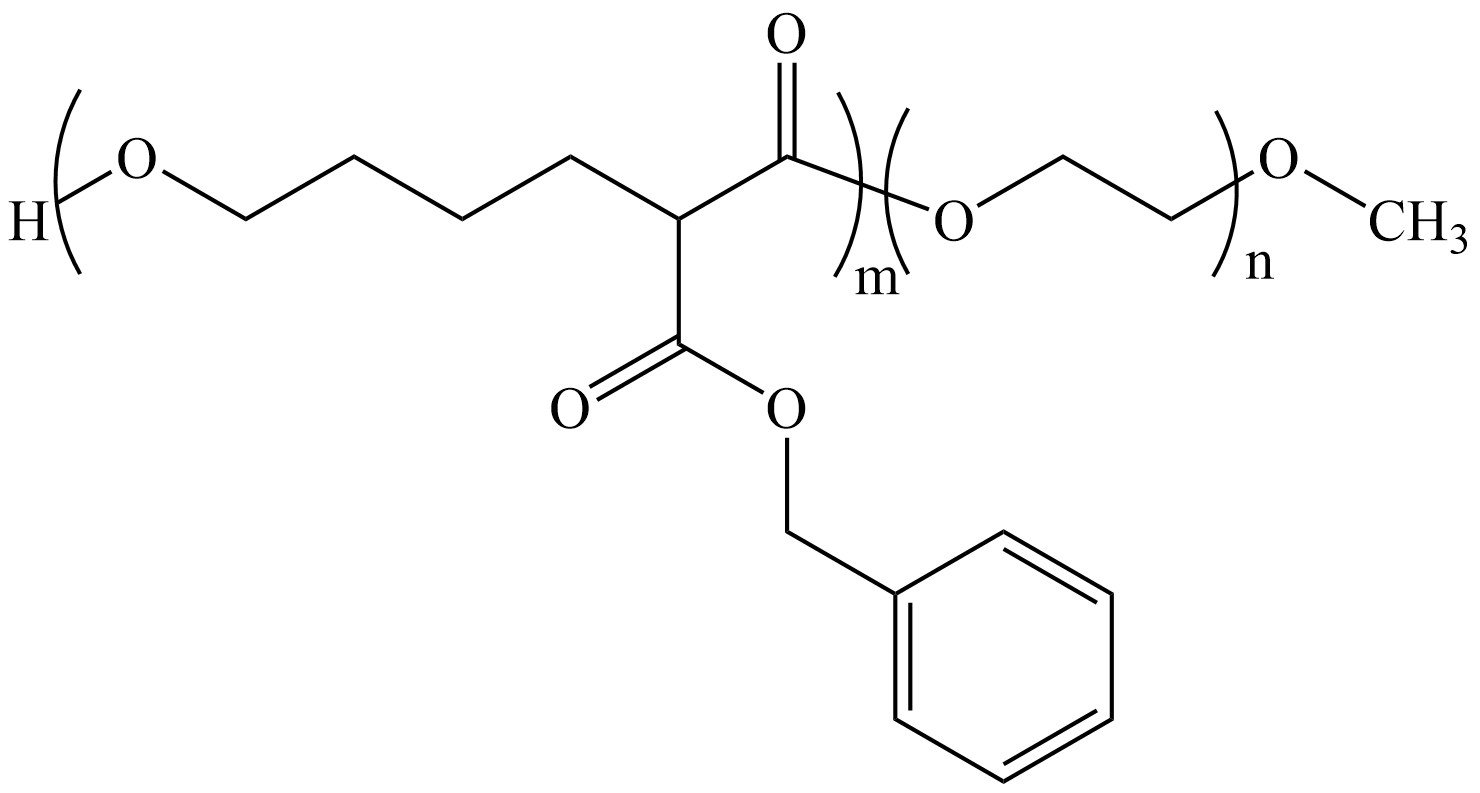
PBCL-PEG is a biodegradable amphiphilic block copolymer consisting of hydrophobic poly(α-benzyl carboxylate-ε-caprolactone) (PBCL) and hydrophilic polyethylene glycol (PEG). The PBCL segment contains pendant benzyl ester functionalities that provide opportunities for further chemical modification and can influence drug-loading behavior and nanoparticle properties.
PBCL-PEG readily self-assembles into polymeric micelles and nanoparticles in aqueous media, making it a valuable material for drug delivery, nanomedicine, and biomaterials research.
Key Properties
- Biodegradable amphiphilic block copolymer
- Hydrophobic PBCL segment
- Hydrophilic PEG segment
- Pendant benzyl ester functional groups
- Self-assembles into polymeric micelles
- Suitable for nanoparticle engineering
Applications
- Polymeric micelles
- Drug delivery systems
- Nanoparticle formulation
- Hydrophobic drug encapsulation
- Biomaterials research
- Nanomedicine applications
Functional Overview
The PBCL segment provides a hydrophobic core capable of encapsulating poorly water-soluble compounds, while the PEG segment improves aqueous stability, steric stabilization, and biocompatibility. The benzyl ester functionalities offer additional opportunities for polymer modification and advanced materials design.
Advantages
- Enhanced hydrophobic drug loading
- Biodegradable polyester backbone
- Stable micelle formation
- Tunable polymer architecture
- Suitable for targeted delivery system development
Summary
PBCL-PEG is a versatile biodegradable block copolymer combining the self-assembly properties of PEGylated polymers with the functional versatility of benzyl-substituted polycaprolactone, making it an excellent platform for drug delivery and nanomedicine research.