Description
General Description
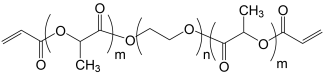
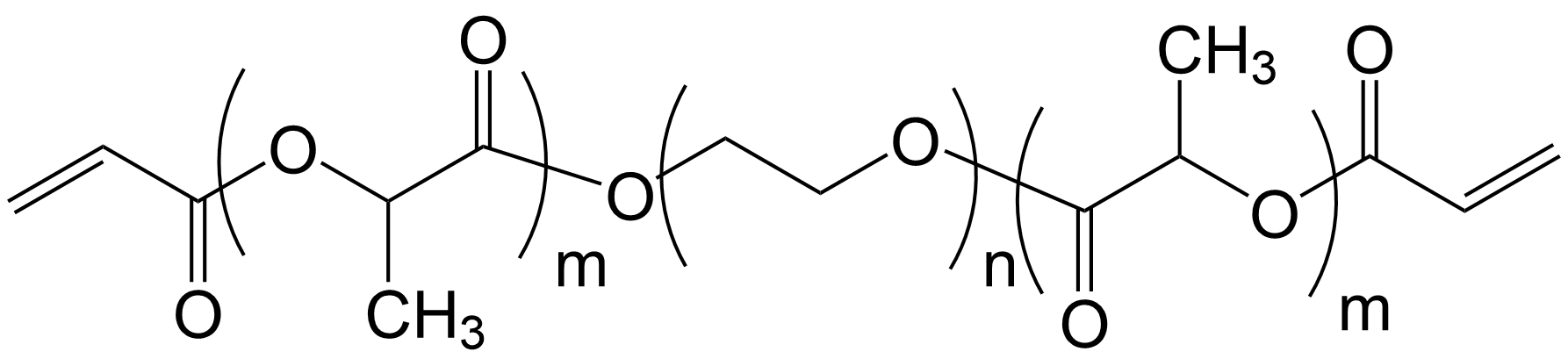
PDLLA-PEG-PDLLA Diacrylate is a biodegradable triblock copolymer designed for the preparation of photocrosslinkable hydrogels and bioresorbable polymer networks. The hydrophobic PDLLA segments contribute biodegradability and mechanical strength, while the PEG segment provides hydrophilicity, flexibility, and biocompatibility.
The terminal acrylate groups readily undergo free-radical polymerization and photopolymerization in the presence of suitable initiators, allowing formation of crosslinked hydrogel structures under mild conditions. PDLLA-PEG-PDLLA Diacrylate is widely used in injectable hydrogels, tissue scaffolds, cell encapsulation, controlled drug release systems, and regenerative medicine research.
Applications
- Photocrosslinkable hydrogel formation
- Injectable hydrogels
- Tissue engineering scaffolds
- Regenerative medicine
- Drug delivery systems
- Controlled drug release
- Cell encapsulation
- 3D bioprinting materials
- Biomedical coatings
- Biomaterials research
Features and Benefits
- Tin-free synthesis process
- Biodegradable PDLLA segments
- Hydrophilic PEG middle block
- Reactive acrylate groups for photocrosslinking
- Suitable for hydrogel fabrication
- Excellent biocompatibility
- Tunable degradation and mechanical properties
- Available in multiple molecular weight combinations