
Description
General Description
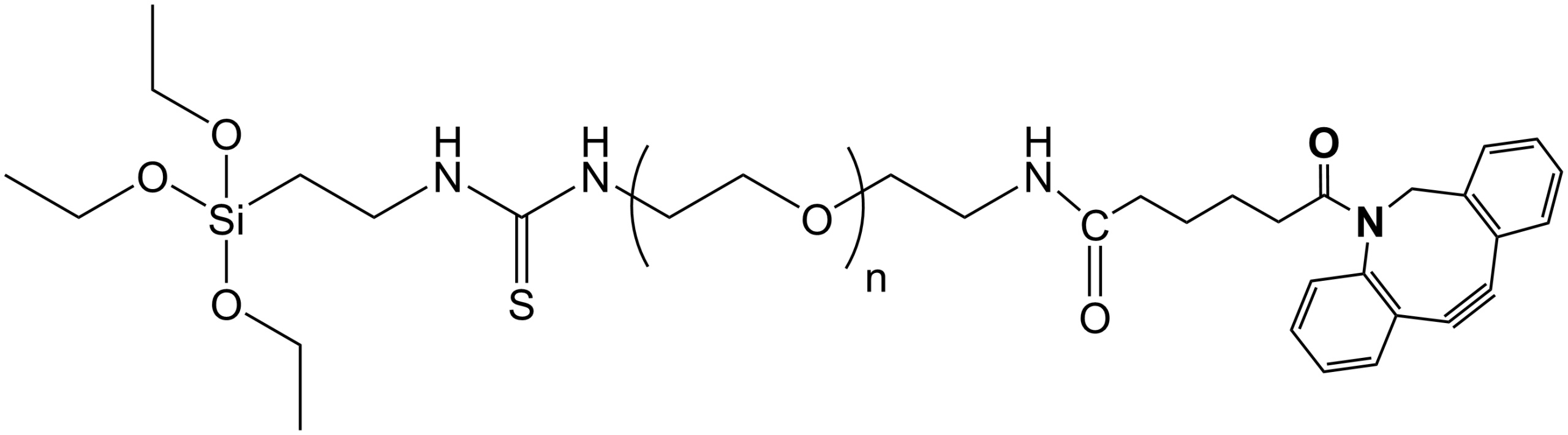
Silane-PEG-DBCO combines surface immobilization capability with bioorthogonal click chemistry functionality in a single molecule. The silane group forms stable siloxane bonds with hydroxylated inorganic surfaces, allowing durable PEG coatings on glass, silica nanoparticles, silicon wafers, and metal oxide materials.
The DBCO group reacts efficiently with azide-containing molecules without requiring copper catalysts, making it ideal for biological applications where copper toxicity is undesirable. The PEG spacer improves hydrophilicity, flexibility, and biocompatibility while reducing nonspecific adsorption.
Applications
- Surface modification of glass and silica materials
- Biosensor and biochip fabrication
- Nanoparticle functionalization
- Copper-free click chemistry conjugation
- Immobilization of proteins and antibodies
- Surface PEGylation
- Biomedical device coatings
- Cell culture surface engineering
- Diagnostic assay development
- Nanomedicine research
Features and Benefits
- Reactive silane group for stable surface attachment
- DBCO group for copper-free click chemistry
- Rapid reaction with azide-containing molecules
- Hydrophilic PEG spacer improves biocompatibility
- Reduces nonspecific surface adsorption
- Suitable for biological and in vivo applications
- Available in multiple PEG molecular weights
- High coupling efficiency