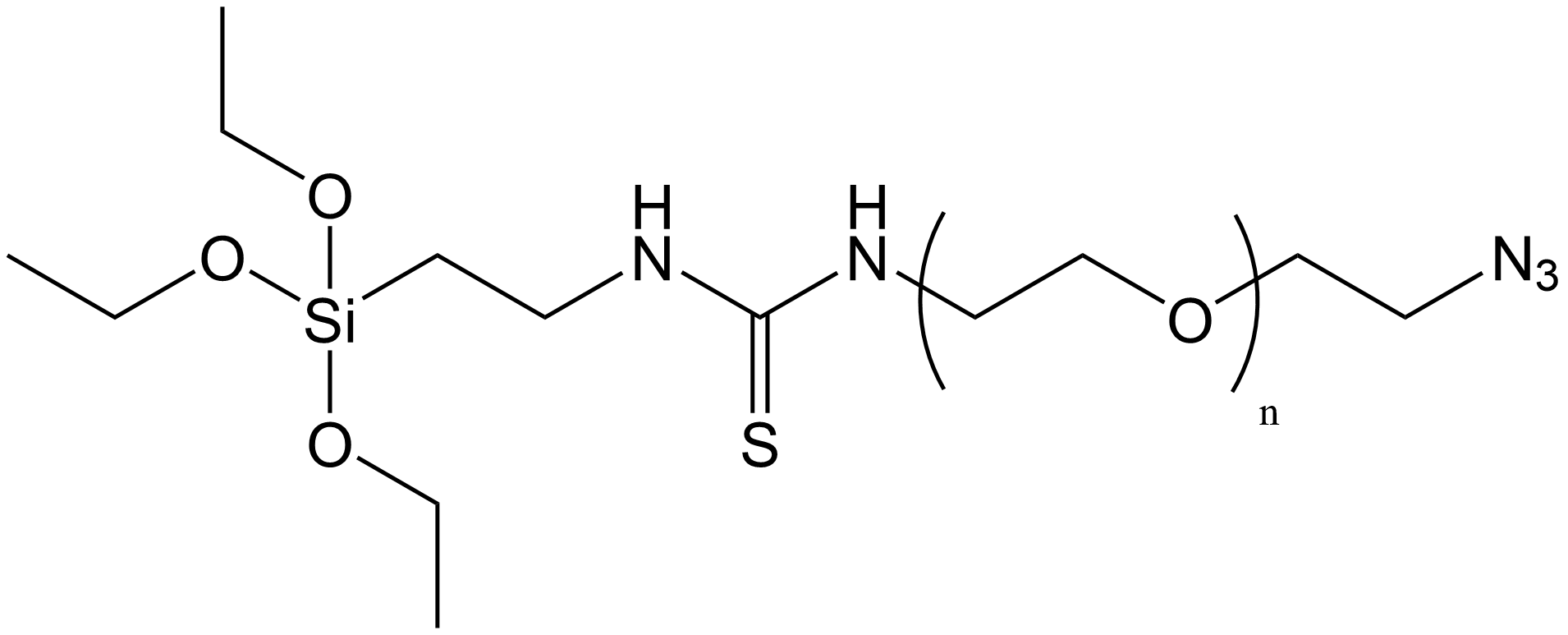
Description
General Description
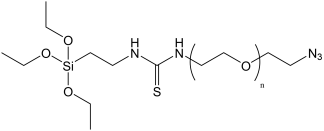
Silane-PEG-N₃ is a bifunctional polyethylene glycol reagent designed for surface functionalization and subsequent bioorthogonal conjugation. The silane group readily reacts with hydroxyl-rich surfaces, forming stable siloxane bonds that anchor the PEG spacer to glass, silica nanoparticles, silicon wafers, metal oxides, and related materials.
The terminal azide group participates efficiently in copper-catalyzed azide-alkyne cycloaddition (CuAAC) and strain-promoted azide-alkyne cycloaddition (SPAAC) reactions, allowing attachment of peptides, proteins, antibodies, nucleic acids, dyes, and other molecules. The PEG spacer enhances hydrophilicity, reduces nonspecific adsorption, and improves biocompatibility.
Applications
- Surface modification of glass, silica, and metal oxide materials
- Biosensor and diagnostic device fabrication
- Functionalization of nanoparticles and nanomaterials
- Bioorthogonal click chemistry conjugation
- Preparation of antifouling and non-fouling coatings
- Immobilization of proteins, peptides, and antibodies
- Microarray and biochip preparation
- Drug delivery and nanomedicine research
- Cell culture substrate engineering
- Biomedical device surface coating
Features and Benefits
- Reactive silane group for stable surface immobilization
- Azide functionality compatible with click chemistry
- Hydrophilic PEG spacer reduces nonspecific binding
- Improves surface biocompatibility
- Available in a wide range of PEG molecular weights
- High coupling efficiency
- Suitable for aqueous and organic reaction conditions
- Facilitates controlled surface engineering